
The Heritage of European & Danish Casino Gaming
From early 17th-century European ridotti to Denmark's historic 1902 royal concession and the modern 1990 casino renaissance.
1. European Origins of the Casino Resort Concept
The word "casino" originates from the Italian word casa (meaning house), initially designating a small country villa, pavilion, or summerhouse constructed for aristocratic leisure. The world's first public, government-sanctioned gaming house was the Ridotto, established in Venice in 1638 to provide controlled gaming during the Carnival season.
Throughout the 18th and 19th centuries, the European casino concept evolved into grand spa resorts (Kurhäuser) in locations such as Spa (Belgium), Baden-Baden, Wiesbaden, and Monte Carlo. These destinations united thermal wellness therapies, palatial architecture, gourmet banquets, and high-stakes roulette under a single luxury hospitality roof.
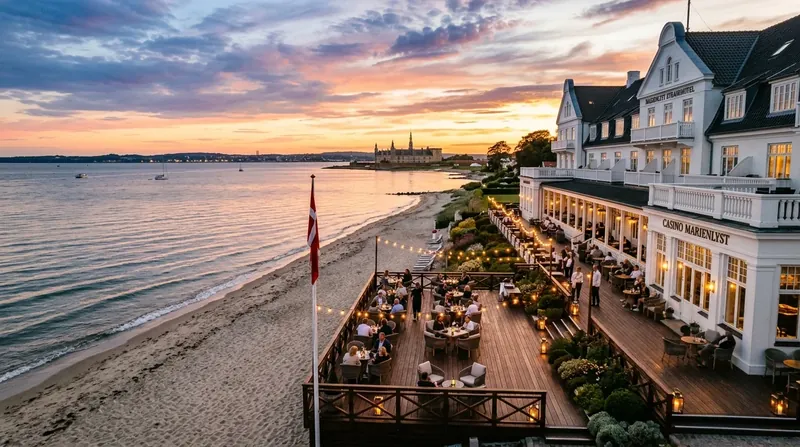
2. Denmark's 1902 Royal Milestone: Casino Marienlyst
Denmark's official casino history began at the dawn of the 20th century. In 1902, King Christian IX granted Denmark's first royal concession for table gaming to the prestigious Marienlyst Kur- og Søbadeanstalt in Helsingør.
Perched along the scenic northern coast of Zealand with sweeping views of Kronborg Castle and Sweden across the Oresund, Marienlyst attracted royalty, European nobility, and prominent artists. It introduced classic roulette wheel gaming to Scandinavia, establishing a tradition of combining seaside wellness with evening salon entertainment.
3. The 1990 Casino Legislation & Modern Renaissance
For nearly a century after Marienlyst's concession, large-scale commercial casino operations remained tightly restricted in Denmark. In 1990, the Danish Parliament (Folketinget) passed landmark legislation modernizing land-based gaming laws and authorizing the establishment of full-scale international casinos in key regional hubs.
This historic reform led to the opening of major venue developments across the nation:
- Casino Copenhagen (1990): Opened inside the Radisson Blu Scandinavia Hotel, quickly becoming the largest casino in Scandinavia.
- Casino Odense (1991): Integrated into the Radisson Blu H.C. Andersen Hotel in the historic center of Odense.
- Casino Royal Aarhus (1991): Established within the neoclassical landmark Hotel Royal on Store Torv.
- Casino Aalborg (1991): Opened along the Limfjord harbor at the Radisson Blu Limfjord Hotel.
- Casino Munkebjerg (1990): Created on the wooded hilltop estate overlooking Vejle Fjord.
4. The 2012 Danish Gambling Act & Spillemyndigheden
On January 1, 2012, Denmark enacted the modern Danish Gambling Act (Spilleloven), creating the independent regulatory authority Spillemyndigheden. This comprehensive statute placed player protection, technical auditing, and responsible gambling at the forefront of the industry.
The introduction of the centralized self-exclusion registry (ROFUS) in 2012 made Denmark an international benchmark for responsible gaming oversight, ensuring that luxury hospitality and player safety exist in complete harmony.
5. The Contemporary Casino Hotel Experience
Today, Denmark's casino hotels have transformed from isolated gaming salons into comprehensive luxury lifestyle destinations. Guests experience Michelin-caliber culinary concepts, tranquil Nordic spa facilities, state-of-the-art conference amenities, and seamless access to regulated gaming tables.